Ferganamedia.uz is registered as an electronic mass media 26 September 2024 by the AOKA under the administration of the President. Certificate number: 414738. Founder: OOO «Fergana Media Press».
Ferganamedia.uz is registered as an electronic mass media 26 September 2024 by the AOKA under the administration of the President. Certificate number: 414738. Founder: OOO «Fergana Media Press».
Ferganamedia.uz is registered as an electronic mass media 26 September 2024 by the AOKA under the administration of the President. Certificate number: 414738. Founder: OOO «Fergana Media Press».
Where are the consumer rights, prize list, probability of winning, and payment terms indicated in the "Wheel of Fortune"? Is Beeline offering a random outcome for money? If so, what is the legal status of this service?
Although operators may cite technical factors, terrain, and building obstructions in their contracts, which legally protect them, this does not change the reality.
Whose fault is the shortage of base stations or network overload?
There is a contract, and there is also a law. Is the “Wheel of Fortune” that resembles gambling legal?
Fortuna barabani
Reminding you of the existence of a contract is Beeline's right. But reminding you of the existence of the law is our duty.
Operator tashlab bergan shartnomasi
Mobile communication and internet are not just services today. A person's work, studies, business, access to public services, and communication with loved ones all depend on the internet.
Therefore, when a subscriber pays for a tariff, they expect stable and quality service in return. This is not an excessive demand, but simply a logical consequence of paying for a service.
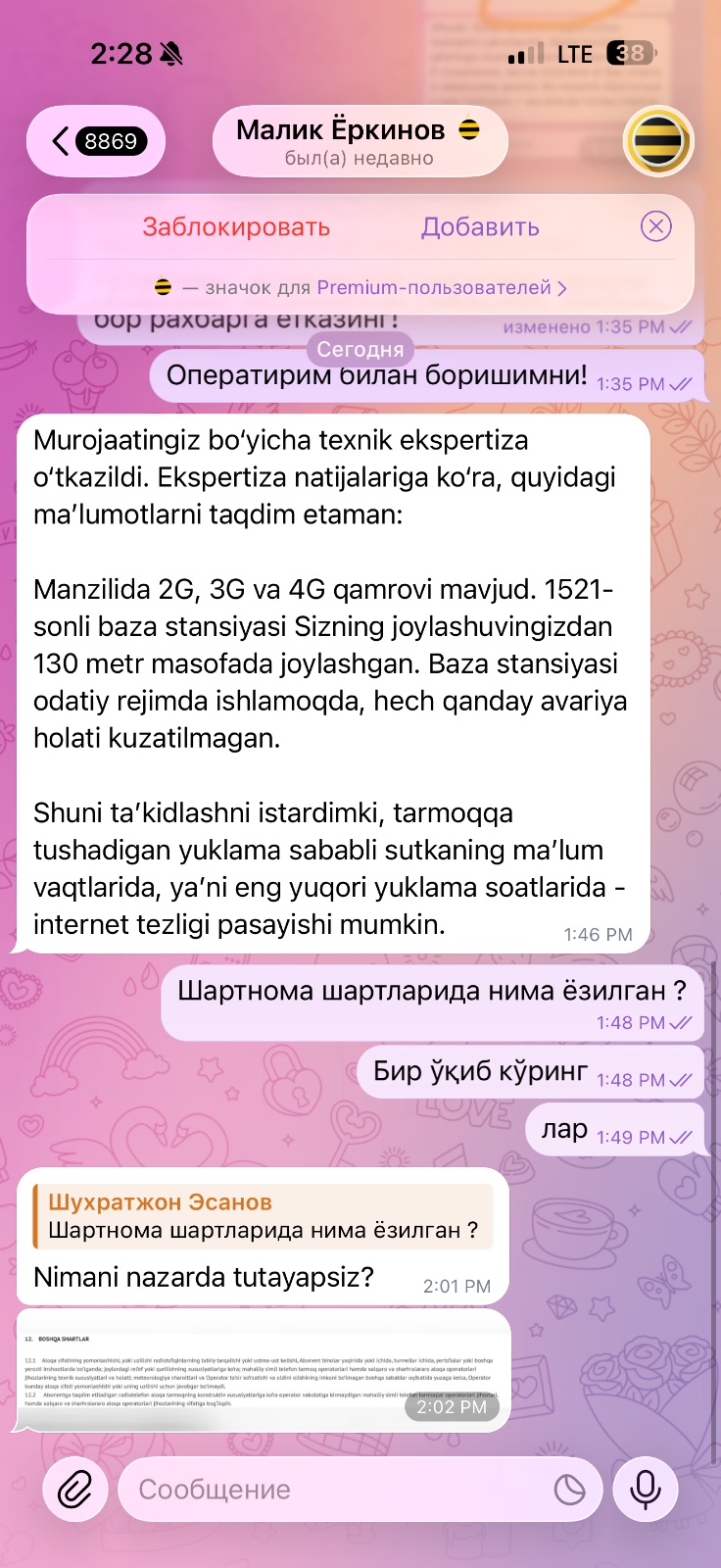
However, in response to a subscriber's complaint about internet quality, Beeline Uzbekistan has been found to rely on clauses 12.1 and 12.2 of the contract.
Clause 12.1 states that natural radio wave propagation, buildings, tunnels, basements, terrain, meteorological conditions, and other factors can affect the deterioration or interruption of communication quality. It is noted that the operator is not responsible in such cases.
Clause 12.2 states that the quality of the radiotelephone communication network provided to the subscriber may depend on the quality of equipment from local wired telephone network operators and international and intercity communication operators, which are beyond the operator's control.
Certainly, from a technical standpoint, such factors can exist. Radio waves, buildings, and weather can all affect communication quality.
But the contract clauses should not become a universal "technical weather report" that explains everything. Do these contract clauses override the consumer rights established by law?
To get ahead of ourselves, we can say: absolutely not!
Article 27 of the Law of the Republic of Uzbekistan No. O'RQ-1015 dated December 27, 2024, "On Telecommunications" stipulates that operators and providers must ensure that the quality of services provided complies with the requirements of legislation and technical regulation normative documents.
Article 28 of the Law grants the user the right to demand timely and quality services from operators and providers. They also have the right to demand compensation for damages incurred in case of non-provision or inadequate provision of services. (Noroma Online)
Thus, the issue is not solely confined to the contract. There is a contract. But there is also the law. Furthermore, the new "Rules for the Provision of Telecommunication Services," registered with the Ministry of Justice on January 26, 2026, under number 3762, more clearly define the obligations of operators.
Clause 313 of the Rules states that operators and providers must ensure that the quality of services provided complies with the requirements of normative documents in the field of technical regulation, technical documents, and regulatory legal acts.
Most importantly, Clause 323 stipulates that a mobile communication operator must ensure the provision of quality, timely, and round-the-clock mobile communication services within its service area. (Noroma Online)
Here, Beeline's response takes on an even more interesting dimension.
Ekspertiza xulosasi ekan
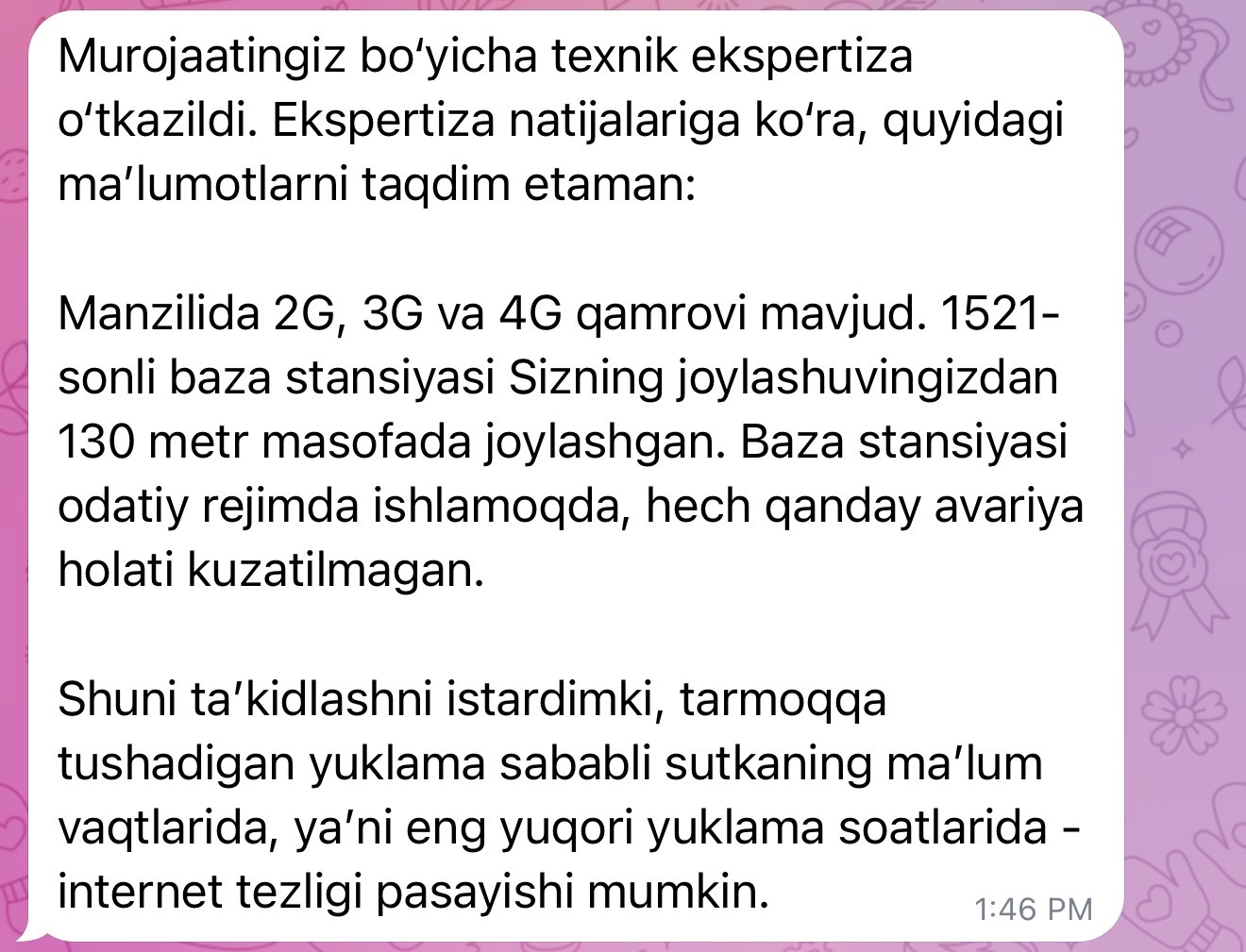
The response stated that there is 2G, 3G, and 4G coverage at the location, the base station No. 1521 is 130 meters away from the subscriber's location, and the base station is operating normally.
However, the company then adds a crucial detail: due to network load, internet speed may decrease during certain hours of the day, i.e., during peak load hours. > So, the base station is working. There is no accident. There is 4G coverage.
The base station is only 130 meters away.
But the internet speed can decrease.
In this situation, the subscriber might need not a new tariff, but a new package of patience. However, the issue is not about the tariff after all – it's about how the service is actually provided.
Then the question arises: If the problem is high load, how high is this load? What is the internet speed when it drops? At what times does it drop? Do these indicators comply with the established service quality requirements?
Beeline states, "technical expertise has been conducted." Very good. Then where are the results of the expertise? When were the measurements taken? What was the download speed? What was the upload speed? What were the ping or latency indicators?
What percentage of the base station's load was reached? What was the actual quality of service provided to the subscriber during peak load times?
Because the information "4G is available" is not the same as the understanding "4G service is of high quality." Just as having food in a restaurant is not the same as it being hot, delicious, and as ordered.
The fact that the base station is 130 meters away does not prove high internet speed.
On the contrary, since the operator itself admits that speed can decrease under high load, the issue now needs to be clarified with technical data.
There is another important point. In the current Rules, the subscriber has the right to demand that the operator fulfill its obligations and provide timely, quality services. Also, in cases where the service is not provided with the required quality, the subscriber has the right to demand the elimination of deficiencies, recalculation of the service price, and compensation for damages incurred. (Noroma Online)
Therefore, it is not possible to simply point to clauses 12.1 and 12.2 of the contract and dismiss the consumer's objection with them.
Because the terms of the contract are applied in conjunction with the requirements of current legislation. Otherwise, the contract may become not a document for service provision, but a convenient guide for exemption from liability.
Beeline uz vakili ekan
Will the authorized state body regulating and supervising the telecommunications sector limit itself to the general technical information provided by the operator itself in response to a consumer's complaint of "my internet is slow," or will it utilize the opportunity to independently assess the quality of service?
After all, the state's task is not limited solely to operator licenses and network development.
The Law itself provides for measures to protect consumer rights in the telecommunications sector. (Noroma Online)
The government portal also clearly states that if the operator fails to fulfill contractual obligations or provides substandard services, the subscriber can contact the Ministry of Digital Technologies. (Government portal of the Republic of Uzbekistan)
Therefore, the question now arises not only for Beeline Uzbekistan but also for the Ministry of Digital Technologies. If the operator says "coverage is available," "the base station is working," "there is no accident," then the controlling body has a simple question: where is the quality of the service the consumer is paying for?
If Beeline can prove that the service quality meets the required level based on technical expertise – please provide the public with precise technical indicators.
If the internet speed is consistently decreasing due to high load – explain its technical and legal basis.
If the network capacity is insufficient to meet subscriber needs – outline specific measures to resolve the issue.
Because the consumer wants to experience the service they paid for, not a list of exceptions from the contract. The subscriber needs working internet, not the consolation that "there is a signal."
There is a contract. But there is also the law.
The operator has technical capabilities.
But the consumer also has rights.
And most importantly, there is state supervision that ensures these rights are not just left on paper.
It is our duty to remind you that the law exists. Now we want to remind you of another issue, dear Beeline executives.
Evgeniy Nastradin Gen direktor Beeline uz
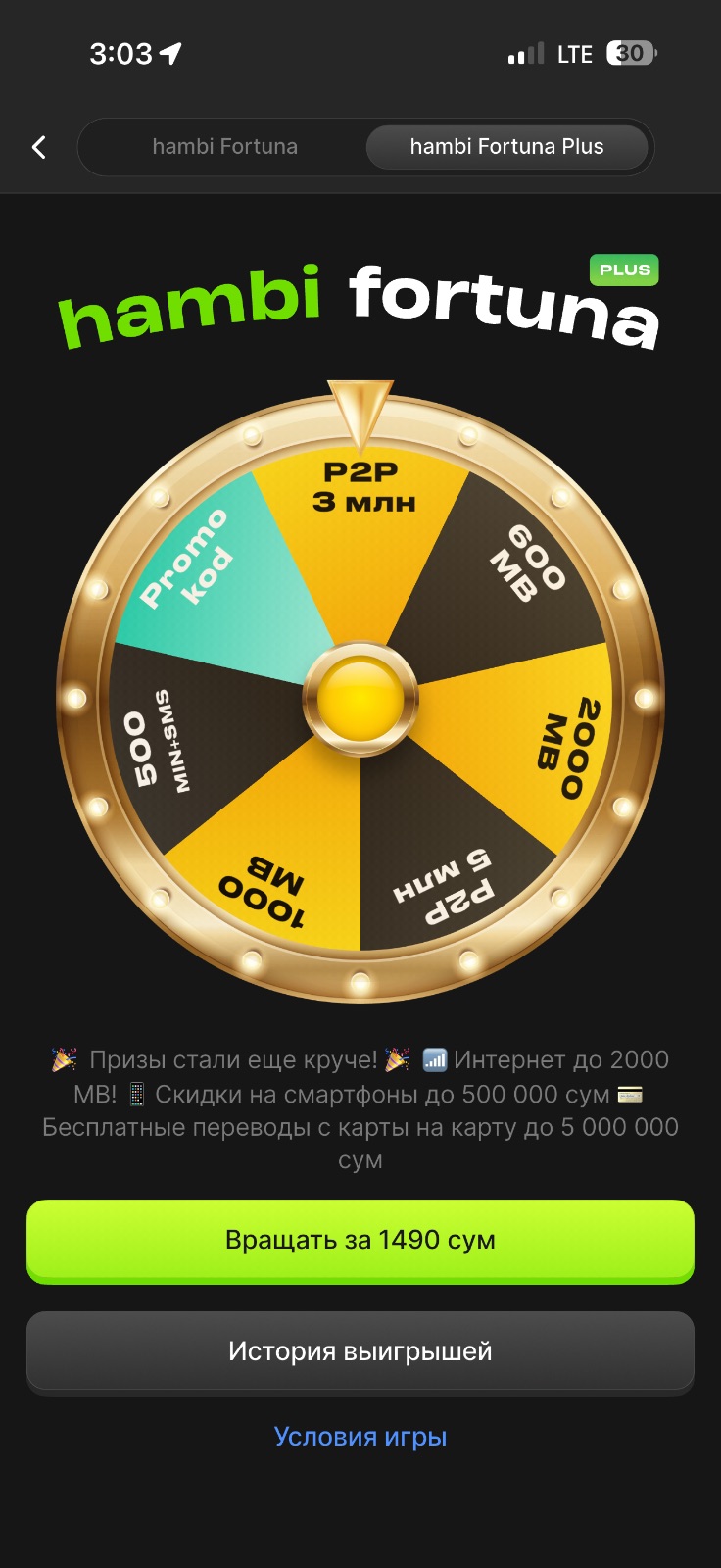
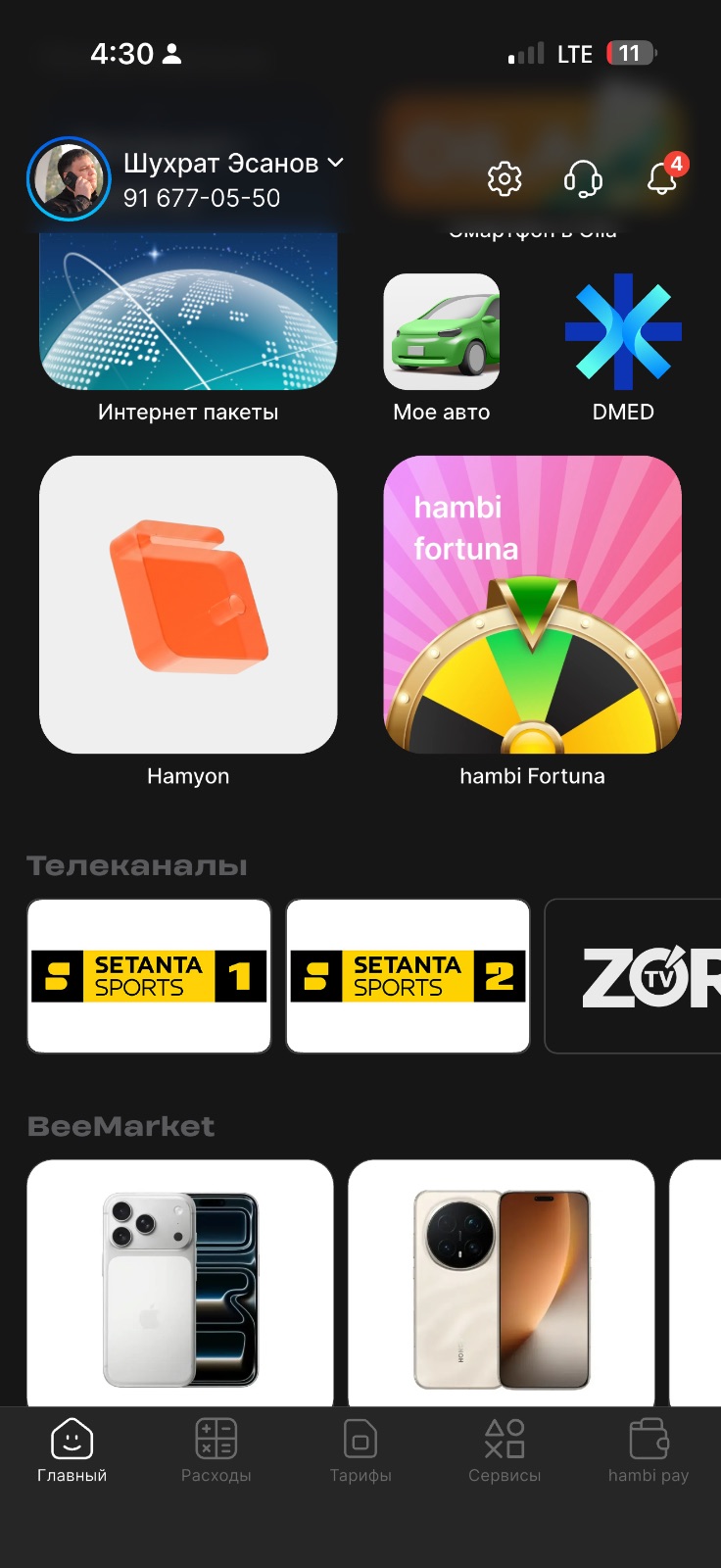
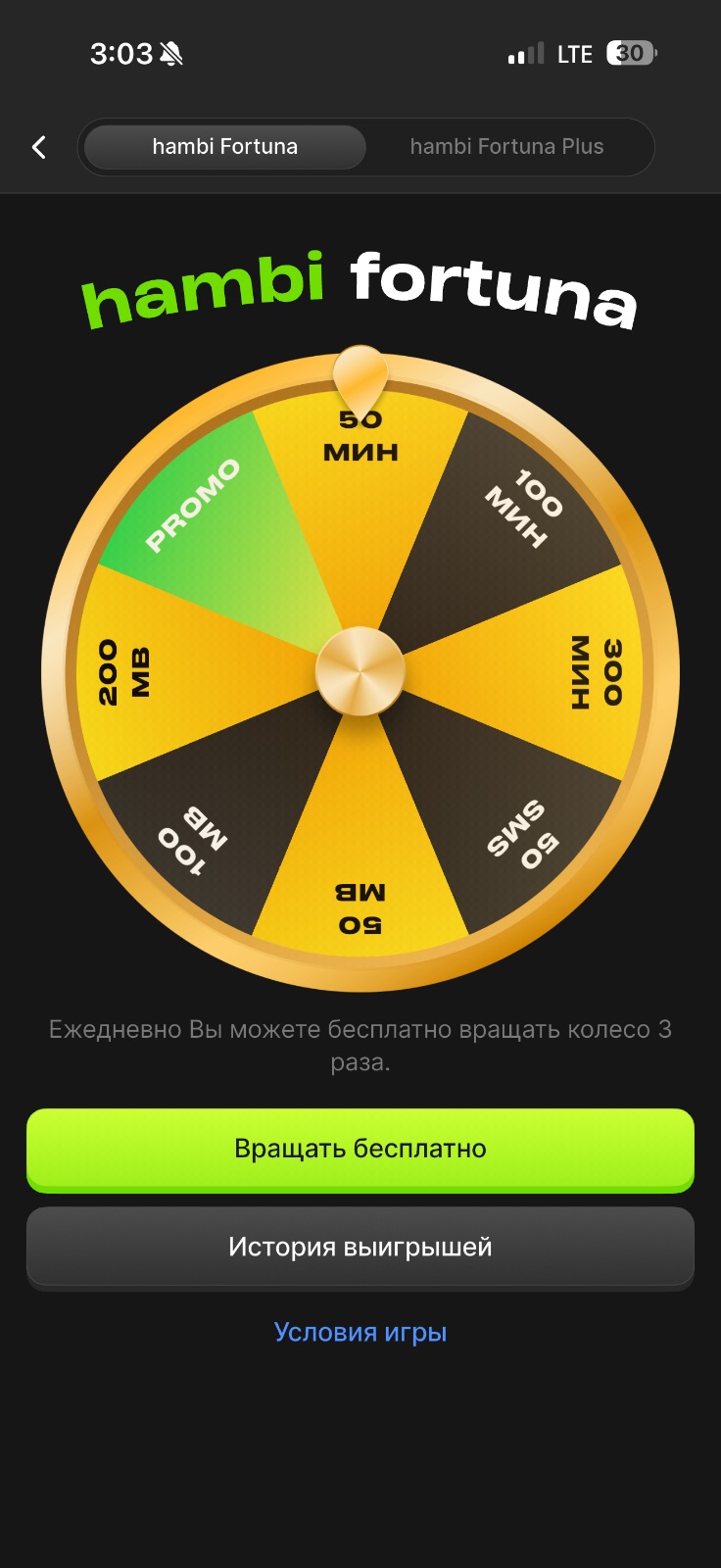
In the Beeline application, there is an offer to spin the "Wheel of Fortune" for 1,400 UZS.
How legal is this service? Does it involve a gambling mechanism or something similar?
HAMBI Ilovasi
After all, the user pays money, and the outcome is not known in advance. They may win a prize, or they may receive no benefit at all. Isn't such a mechanism based on risk?
If a participant pays 1,400 UZS and awaits a random outcome, how is the legal nature of this process assessed?
Is this a regular marketing promotion? An entertainment service provided for a fee? "Or a mechanism that includes elements of risk and random chance characteristic of gambling?" Of course, we are posing this question as an inquiry! We await your response and reaction! We are waiting and leaving! After all, we need to know if it aligns with our mentality!
Certainly, we are not trying to accuse anyone with these questions. It is not within our purview to legally assess such situations.
We are merely asking questions. It is your task to answer them.
Dear Beeline executives, please clearly explain the legal basis of this "Wheel of Fortune" mechanism.
What is the 1,400 UZS fee for participation for?
In what order are the prizes formed? Is the user provided with complete and accurate information about this?
When answering these questions, a general comment like "this is just an in-app promotion" may not be sufficient. Because what matters is not the name, but the mechanism itself: is money paid, is the outcome random, is there a prize, and does the participant take a risk?
Therefore, the issue should not be viewed narrowly as "who is right: Beeline or the consumer?" but rather based on two clear questions: Is the telecommunication service, for which full payment has been made, actually provided with the quality required by legislation? What kind of service, from a legal perspective, is offered for 1,400 UZS through the "Wheel of Fortune"?
The answer to these questions should come not from a contract clause, but from precise technical measurements, a clear legal basis, and the law.
Otherwise, there is a nice phrase like "technical expertise," but the expertise itself remains unknown. And whether the "Wheel of Fortune" is a promotion, a game, or a mechanism close to gambling – this question will also remain unanswered?
Ferganamedia.uz is registered as an electronic mass media 26 September 2024 by the AOKA under the administration of the President. Certificate number: 414738. Founder: OOO «Fergana Media Press».